
Why Your Bag Choice Matters in the Field
From your radio and antennas to batteries, coax, guy lines, and a laptop or tablet for digital logging, there’s a lot that goes into a portable ham radio setup. Being able to choose the best bag for portable ham radio is a very subjective topic. However, a well-chosen bag can mean the difference between a smooth, organized activation and a frustrating game of gear Jenga in the field.
Let’s face it: it’s easy to fall into the trap of packing everything and the kitchen sink “just in case.” Choosing the right bag helps you carry only what you need, keeps it organized, and ensures it survives the trip.
Know Your Activation Style
The best bag for portable ops depends on how you activate:
- SOTA hiker? You’ll prioritize weight, weatherproofing, and stability.
- POTA operator with a park table? You might favor modular storage and quick access.
- Bike or mobile-based activator? You’ll want compact gear that packs tightly.
There’s no one-size-fits-all. Think about the environments you operate in most.
Core Questions to Ask Before Choosing
- What gear do I always take with me?
- Do I want one big bag or multiple smaller ones?
- How do I power my gear (internal batteries, power box, solar)?
- How long am I out, and do I need to bring water, snacks, or shelter?
- How fast do I want setup and teardown to be?
Pro Tip: Multiple small bags often make packing and deployment easier. Group similar items (like power cables and batteries in one bag, antennas in another, and your guying kit in a third) so you’re not digging around when it’s time to operate.
Popular Bag Types and Their Strengths
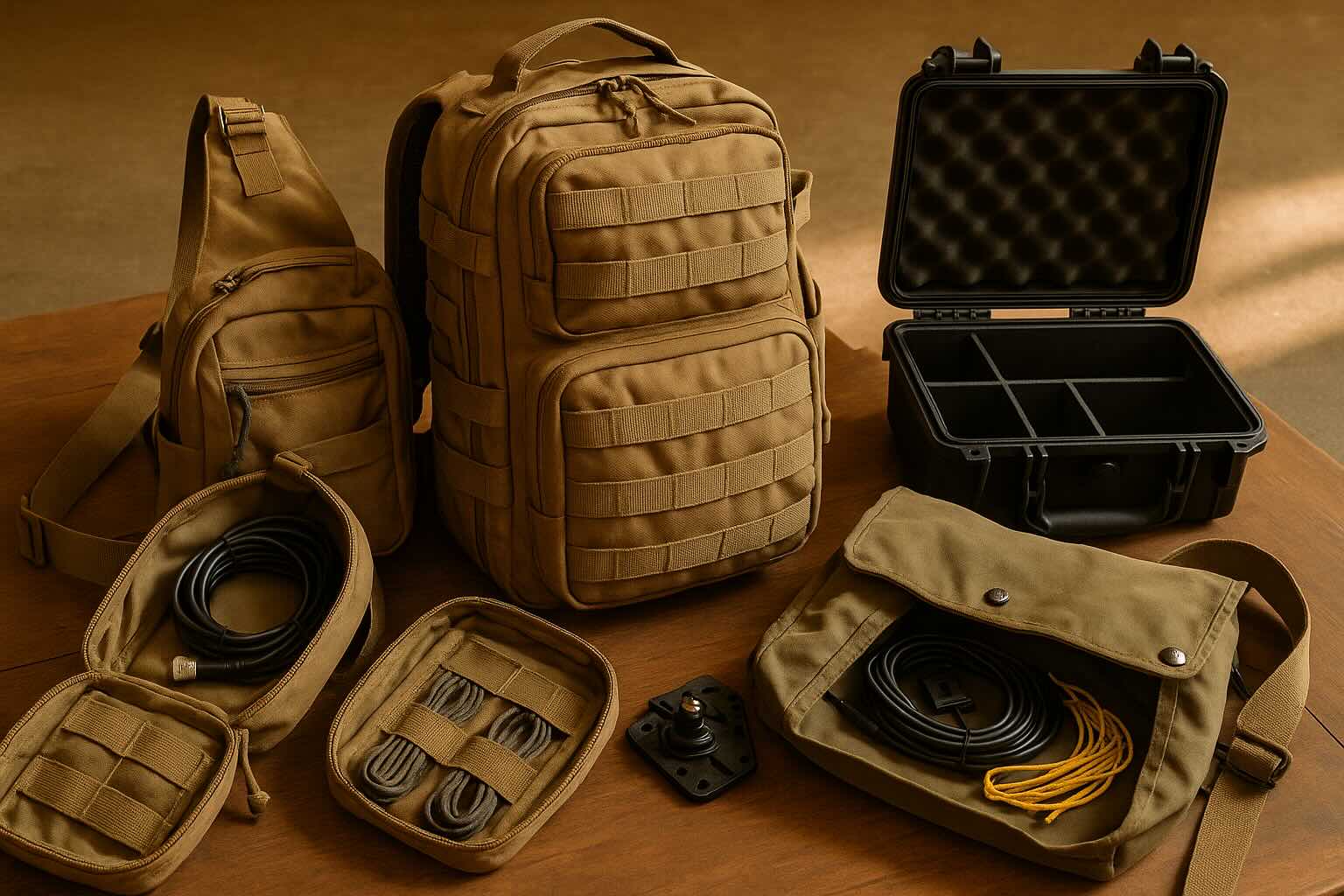
| Bag Type | Strengths | Limitations |
|---|---|---|
| Sling Bags / Shoulder Packs | Quick access, compact, good for light loads | Can become uncomfortable — I tried one and it nearly choked me out. I now use it to carry my notebook to club meetings. |
| Backpacks | Great load balance, tons of size options, good for hiking | Can be bulky for short activations or simple setups |
| Tactical/MOLLE Pouches | Modular, customizable layout, easy to expand | Requires a base (like a vest or panel) and good planning |
| Hard Cases (Pelican-style) | Best protection, great for vehicle storage | Heavy, not ergonomic for carrying, and can be expensive |
| Surplus Gear | Tough, often budget-friendly, good for hacking/modding | May require repair or deep cleaning before use |
Bonus: Tactical/MOLLE Pouches are perfect for MYOG sewing projects
Field-Tested Features to Look For
- Clamshell or front-opening design for fast layout access
- Weather-resistant zippers or roll tops for wet conditions
- Internal dividers, pouches, and padding for gear protection
- External MOLLE for adding more later
- Padded straps and adjustable harnesses
- 3D printed MOLLE accessories can be a great way to adapt off-the-shelf bags to your needs
Don’t Forget Comfort and Portability
Test how your pack rides when fully loaded — not just around the house, but in the kind of terrain or setting you typically activate in. Try walking a trail or even setting up in your backyard like it’s a mini activation. This low-stakes dry run helps you uncover what works — and what doesn’t — before you’re out in the field. That “just right” bag will feel balanced, not bulky. A bag that fits your body and holds your gear well is worth its weight.
Pro Tip: Use your setup — seriously. Try it on a POTA activation or Field Day event. Heck, even unpack and set up in your back yard. You’ll quickly learn what works, what annoys you, and what you forgot to pack. Experience is the best way to refine your load-out.
My Preferred Setup (Optional Example)
Personally, I use a 5.11 Tactical Rush 24 backpack with removable pouches. I separate my activation gear into categories:
- One pouch for my radio, mic, and accessories (I carry coax separately because of its bulk)
- One for power (battery, cables, and a 12V car charger for the laptop I use for logging)
- Another for support gear like paracord, stakes, and a small notepad
This makes packing fast and teardown effortless — especially when weather’s rolling in.
Conclusion
The right bag makes activations easier, safer, and way less frustrating. Whether you’re climbing a ridge for a SOTA contact or operating from a picnic table, knowing what you need and how to pack it means you can focus on making contacts — not managing clutter.
Start with the bag that fits your needs now, and don’t be afraid to upgrade, hack, or even sew your own down the road. My Buy or Build article covers how to evaluate gear that can grow with your skills, and if you’re ready to plan your own bag, Plan It Right will help you get started.
If you’ve built or modded your perfect field bag, tag @printpresssew and use #MYOGJourney. I’d love to see what you carry!


